Smyl Manatee |

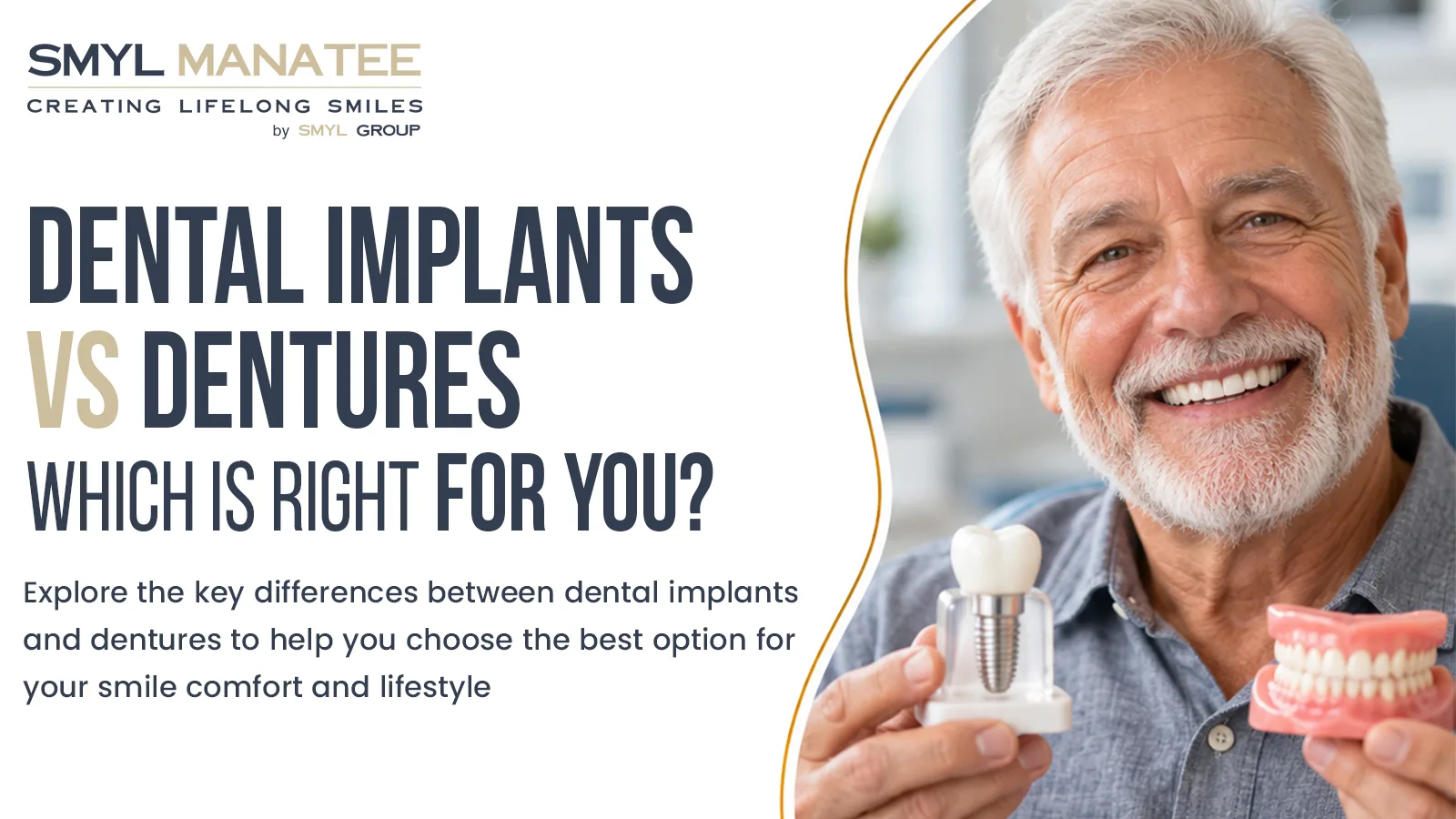
Dental Implants vs. Dentures: Which Is Right for You?

Dental Implants vs. Dentures: Which Is Right for You? Compare dental implants and dentures to understand the benefits, differences, and factors to consider when replacing missing teeth. Losing one or more teeth can affect much more than your smile. Missing teeth can make eating and speaking more difficult, change the way your remaining teeth function, and impact your confidence. Fortunately, there are several options for replacing missing teeth. Two of the most common are dental implants and dentures. But which option is right for you? The answer depends on several factors, including how many teeth you’re missing, your oral health, your jawbone condition, your lifestyle, and your long-term goals. If you’re considering tooth replacement in Bradenton, FL, Lakewood Ranch, Palmetto, or surrounding Manatee County, here’s what you should know about dental implants versus dentures. What Are Dental Implants? Dental implants are designed to replace missing teeth in a way that closely resembles the structure of a natural tooth. A dental implant typically consists of: An implant post that is placed into the jawbone An abutment that connects the implant to the restoration A crown, bridge, or denture that replaces the visible portion of the missing tooth or teeth Because the implant is anchored in the jawbone, it can provide a stable foundation for replacement teeth. Dental implants can be used to replace a single missing tooth, several missing teeth, or support a full-arch restoration depending on the patient’s needs. What Are Dentures? Dentures are removable dental appliances designed to replace missing teeth. Depending on how many teeth need to be replaced, you may hear about: Complete dentures: Replace an entire arch of missing teeth. Partial dentures: Replace several missing teeth while working around remaining natural teeth. Dentures can restore the appearance of your smile and help improve chewing and speaking. Modern dentures can be designed to look natural and provide a comfortable fit when properly made and maintained. Dental Implants vs. Dentures: The Key Differences While both options can replace missing teeth, they work differently. Feature Dental Implants Dentures Removable Usually no Yes Stability Anchored in the jaw Rests on gums and/or uses other retention Can replace one tooth Yes Generally not the typical choice Can replace multiple teeth Yes Yes Can replace a full arch Yes, with implant-supported solutions Yes Jawbone stimulation Helps maintain bone through functional loading Does not provide the same stimulation Maintenance Similar to caring for natural teeth, depending on restoration Requires removal and appliance care Treatment timeline Typically longer Often faster Surgical procedure Yes No implant surgery Neither option is automatically better for every patient. The right choice depends on your individual situation. 1. Dental Implants Can Feel More Like Natural Teeth One of the biggest reasons patients choose dental implants is stability. Because implants are anchored into the jawbone, they don’t rely solely on suction, adhesives, or the shape of the gums to stay in place. For many patients, this can make eating and speaking feel more natural. Implants may also help you avoid some of the movement that can occur with traditional removable dentures. 2. Dentures Can Be a Practical Tooth Replacement Option Dentures remain a popular option because they can replace multiple missing teeth without implant surgery. They can be particularly useful for patients who: Need to replace many or all missing teeth Prefer a removable solution Are not currently candidates for implants Want a potentially simpler treatment approach However, dentures do require regular care and may need adjustments over time as your mouth changes. 3. Your Jawbone Matters One important difference between the two options involves the jawbone. When a natural tooth is lost, the bone surrounding that tooth no longer receives the same stimulation it once did. Over time, bone loss can occur. Dental implants are placed into the jawbone and can help maintain bone in the area through functional loading. Traditional dentures sit over the gums and do not replace the tooth root, so they do not provide the same type of stimulation to the jawbone. If you’ve been missing teeth for a long time, your available bone may also affect whether implants are an option. In some situations, additional procedures may be considered before implant placement. 4. Think About How You Want to Eat Eating comfortably is an important part of choosing a tooth replacement option. Traditional dentures can restore chewing ability, but some patients may find that certain foods are more challenging to eat, particularly if the denture moves or doesn’t fit properly. Implant-supported teeth are secured more firmly, which can provide greater chewing stability. Your dentist can evaluate your bite, jawbone, and remaining teeth to help determine which approach makes sense for you. 5. Consider Your Daily Routine Both dental implants and dentures require maintenance. With implants, your care routine depends on the type of restoration you receive. Implant-supported crowns and bridges generally require brushing, flossing, and professional dental care. Dentures require: Daily cleaning Proper storage when removed Regular dental evaluations Periodic adjustments or replacement when needed Your lifestyle and willingness to maintain your restoration should be part of the decision. 6. What About Cost? Cost is naturally an important consideration when replacing missing teeth. Generally, dental implants require a larger initial investment than traditional dentures because implant treatment may involve surgery, multiple appointments, diagnostic imaging, and customized restorations. Dentures can have a lower initial cost, depending on the type and complexity of treatment. However, it’s important to look beyond the initial price. The long-term value of a tooth replacement option depends on factors such as durability, maintenance, future adjustments, replacement needs, and your overall oral health. Your dentist can provide a personalized treatment plan and explain the costs associated with your specific situation. 7. How Long Does Treatment Take? Treatment timelines can vary significantly. Dentures may be completed relatively quickly, depending on your individual needs and whether extractions or other procedures are required. Dental implants typically involve multiple stages. The implant needs time to integrate with the surrounding bone before the final restoration is
How Missing Teeth Affect More Than Just Your Smile

How Missing Teeth Affect More Than Just Your SmileUnderstanding the Impact of Tooth Loss on Your Oral Health, Confidence & Daily Life Losing a tooth can feel like a cosmetic problem, especially when it happens toward the front of your mouth. But a missing tooth affects much more than the way your smile looks. Even one missing tooth can change the way you chew, speak, and bite. Over time, the surrounding teeth and jawbone can also be affected. The good news is that replacing a missing tooth can help restore both function and confidence. At Smyl Manatee, we help patients in Bradenton, FL, Lakewood Ranch, Palmetto, and surrounding Manatee County communities explore tooth replacement options, including dental implants, bridges, and dentures. Why Does Losing a Tooth Matter? Your teeth are designed to work together. Each tooth plays a role in chewing and helps maintain the position of the teeth around it. When one tooth is missing, the balance can change. You may not notice significant changes immediately, but over time, tooth loss can contribute to several oral health concerns. Missing Teeth Can Lead to Jawbone Loss One of the biggest effects of tooth loss happens beneath the gums. Your natural tooth root stimulates the jawbone when you chew. When the tooth and root are gone, that stimulation is reduced, and the bone in that area can gradually shrink. This is known as bone resorption. Over time, bone loss can: Change the shape of your jaw Reduce support for neighboring teeth Affect facial structure Make certain tooth replacement options more complicated Dental implants are unique because they replace both the visible tooth and the function of the tooth root, helping provide stimulation to the surrounding jawbone. Your Remaining Teeth Can Shift Think of your teeth like pieces of a puzzle. They help support and stabilize one another. When a tooth is missing, nearby teeth may gradually move into the open space. This can lead to: Changes in your bite Crowding Difficulty cleaning between teeth Increased food trapping Additional stress on remaining teeth Replacing the missing tooth can help maintain the space and support proper alignment. Eating and Chewing Can Become More Difficult A missing tooth can make certain foods harder to chew. Some people unconsciously compensate by chewing primarily on the opposite side of their mouth. Over time, this can place additional stress on the remaining teeth. Replacing the missing tooth may help restore more balanced chewing function and make eating more comfortable. Missing Teeth Can Affect Your Speech Your teeth play an important role in forming certain sounds. Depending on which tooth is missing, you may notice changes in the way you pronounce certain words or sounds. This can be especially noticeable when multiple front teeth are missing. A properly designed tooth replacement can help restore normal speech patterns. Tooth Loss Can Affect Your Confidence There’s also an emotional side to missing teeth. You may find yourself: Smiling less often Avoiding photographs Covering your mouth when talking Feeling uncomfortable meeting new people Becoming more self-conscious at work or social events Replacing missing teeth isn’t only about appearance. Restoring your smile can help you feel more comfortable in everyday situations. Missing Teeth Can Change Facial Appearance Your teeth and jawbone provide structural support for the lower portion of your face. When teeth are missing and bone loss occurs, that support can gradually decrease. Significant tooth loss may contribute to: Changes around the lips A more sunken facial appearance Changes in facial proportions Replacing missing teeth and maintaining jawbone support can help preserve your natural facial structure. Your Remaining Teeth May Experience More Stress When one tooth is missing, the remaining teeth may have to do more work. This can place additional forces on the teeth that remain, particularly if your bite changes. Over time, excessive stress may contribute to wear, fractures, or other dental problems. Replacing missing teeth helps restore a more complete chewing system. Is It Okay to Leave a Missing Tooth Alone? Sometimes patients think, “It’s only one tooth, so I’ll deal with it later.” But waiting isn’t always the best approach. The longer a tooth remains missing, the more likely you are to experience changes in the surrounding bone and teeth. Depending on your individual situation, delaying treatment may also mean that additional procedures are needed before certain replacement options can be considered. That’s why it’s worth discussing your options with a dentist sooner rather than later. What Are Your Options for Replacing Missing Teeth? There isn’t one solution that’s right for everyone. At Smyl Manatee, your dentist can discuss several options based on your oral health, goals, and budget. Dental Implants Dental implants are designed to replace a missing tooth from the root up. An implant is placed into the jawbone and supports a dental crown designed to look and function like a natural tooth. Implants can be an excellent option for patients looking for a stable, long-term tooth replacement solution. Dental Bridges A dental bridge fills the space created by a missing tooth and is supported by neighboring teeth. Bridges can restore appearance and chewing function without requiring an implant. Dentures Partial or full dentures can replace multiple missing teeth and may be an appropriate option depending on your needs. Your dentist can help you compare the benefits and limitations of each approach. Why Dental Implants May Be Worth Considering For many patients, dental implants offer several important advantages. They can: Replace the missing tooth root Provide a stable foundation for a crown Help restore chewing function Look natural Help maintain jawbone stimulation Avoid relying on neighboring teeth for support in many cases However, not every patient is automatically an implant candidate. A comprehensive dental evaluation is necessary to determine whether implants are appropriate for you. Considering Dental Implants in Bradenton? At Smyl Manatee, we offer a Complimentary Dental Implant Consultation and Exam for eligible patients. Your consultation can help you understand: Whether you’re a potential implant candidate Your available treatment options Whether additional procedures

How Long Do Dental Implants Last?

How Long Do Dental Implants Last? Tips to Maximize Their LifespanA Long-Term Solution for Missing Teeth in Bradenton, FL Dental implants are one of the most reliable and natural-looking tooth replacement options available today. If you’re considering implants, one of the first questions you may have is: “How long will they last?” The good news is that dental implants are designed to be a long-term solution. With proper care and maintenance, many implants can last decades—and often a lifetime. At Smyl Manatee, we help patients throughout Bradenton restore their smiles with dental implants that look, feel, and function like natural teeth. What Is a Dental Implant? A dental implant is a replacement tooth root made from biocompatible titanium. The implant is placed into the jawbone, where it integrates naturally with the bone and provides a stable foundation for a crown, bridge, or denture. A complete implant restoration typically includes: The implant post The abutment (connector) The custom dental crown Together, these components create a secure and natural-looking replacement for a missing tooth. How Long Do Dental Implants Last? Dental implants have one of the highest success rates in modern dentistry. In many cases: The implant post can last 20 years or more Many patients keep their implants for a lifetime Implant crowns often last 10–15 years or longer before they may need replacement due to normal wear The longevity of an implant depends on several factors, including oral hygiene, lifestyle habits, and overall health. Why Dental Implants Last Longer Than Other Tooth Replacements Unlike traditional bridges or removable dentures, implants replace the tooth root as well as the visible tooth. Benefits include: ✔ Stability and durability ✔ Jawbone preservation ✔ Reduced risk of shifting teeth ✔ Natural chewing function ✔ Long-term reliability Because implants fuse with the jawbone, they become a permanent part of your smile. 7 Tips to Maximize the Lifespan of Your Dental Implants 1. Brush Twice Daily Even though implants cannot develop cavities, the gums and surrounding tissues still require daily care. Use: A soft-bristled toothbrush Fluoride toothpaste Gentle brushing techniques 2. Floss Every Day Plaque can accumulate around implants just like natural teeth. Daily flossing helps: Prevent gum disease Protect implant-supporting tissues Reduce inflammation 3. Keep Up with Dental Checkups Regular dental visits allow your dentist to monitor the health of your implant and surrounding bone. Routine exams help identify problems before they become serious. 4. Avoid Tobacco Products Smoking significantly increases the risk of implant failure by interfering with healing and reducing blood flow to the gums. Patients who avoid tobacco often experience better long-term implant success. 5. Protect Against Teeth Grinding Grinding or clenching can place excessive pressure on implant restorations. If you grind your teeth at night, a custom night guard may help protect your investment. 6. Maintain Healthy Gums The most common cause of implant complications is peri-implant disease, a condition similar to gum disease. Healthy gums are essential for long-term implant success. 7. Address Problems Early If you notice: Gum swelling Bleeding Pain around an implant A loose restoration Schedule a dental evaluation promptly. Early treatment can prevent more significant issues. What Can Cause Dental Implants to Fail? Although implant success rates are extremely high, complications can occur when: Oral hygiene is neglected Gum disease develops Smoking interferes with healing Excessive grinding damages components Regular maintenance is skipped Fortunately, many of these risks are preventable. Why Patients in Bradenton Choose Dental Implants Dental implants offer benefits beyond replacing missing teeth. They help: Preserve jawbone health Maintain facial structure Improve chewing ability Enhance confidence Support long-term oral health For many patients, implants are one of the best investments they can make in their smile. Complimentary Dental Implant Consultation Available If you’re considering dental implants, Smyl Manatee offers a Complimentary Dental Implant Consultation and Exam for eligible patients. During your consultation, we can discuss: Your treatment options Implant candidacy Digital imaging findings Expected timelines and outcomes Invest in a Smile Built to Last Dental implants are designed to provide years of comfort, function, and confidence. With proper care and regular dental visits, they can remain a strong, reliable part of your smile for decades. If you’re exploring tooth replacement options or have questions about dental implants, our team is here to help. Call us to schedule your complimentary implant consultation today. CALL NOW

How Dental Implants Help Maintain Facial Structure

How Dental Implants Help Preserve Facial Structure Dental implants are unique because they replace both the visible tooth and the root beneath it.  Unlike dentures or bridges, implants are placed directly into the jawbone. This helps: Stimulate the bone naturally Reduce bone loss Maintain facial support Preserve natural facial contours Keep nearby teeth stable Because implants function like natural tooth roots, they help maintain the structure that supports your face. More Than Cosmetic Benefits Dental implants offer benefits beyond appearance: Restore chewing ability Improve speech Provide long-term stability Prevent shifting teeth Boost confidence For many patients, implants improve both function and quality of life. Advanced Implant Planning at Smyl Manatee At Smyl Manatee, we use advanced technology to plan implant treatment precisely. Our process may include: 3D CT scans Personalized treatment planning Guided implant placement Detailed smile restoration evaluation We focus on creating results that look natural and support long-term oral health. Complimentary Dental Implant Consultation Available If you’re considering implants, Smyl Manatee offers a Complimentary Dental Implant Consultation and Exam for eligible patients. This may include: ✔ Implant evaluation ✔ Digital imaging ✔ Treatment discussion ✔ Personalized recommendations It’s a great way to explore your options and understand whether implants are right for you. Restore More Than Your Smile Replacing missing teeth isn’t just about filling a gap — it’s about protecting your appearance, confidence, and long-term health. If you’ve lost a tooth or are exploring replacement options, now may be the perfect time to learn how dental implants can help preserve your smile and facial structure. CALL NOW