Smyl Manatee |

Top 7 Signs It’s Time for a Dental Cleaning

Top 7 Signs It’s Time for Your Dental Cleaning Discover the warning signs that your teeth and gums may need professional cleaning—and why regular dental cleanings matter for a healthier smile. Regular brushing and flossing are essential for keeping your teeth healthy, but they cannot remove everything that builds up on your teeth over time. Plaque and tartar can collect around the gumline and in areas that are difficult to reach with a toothbrush. That’s where a professional dental cleaning comes in. If you live in Bradenton, FL, Lakewood Ranch, Palmetto, or the surrounding Manatee County area, knowing when it’s time for a cleaning can help you stay ahead of cavities, gum disease, bad breath, and other oral health problems. Here are 7 signs it may be time to schedule your next dental cleaning. 1. You Notice Plaque or Tartar Buildup Plaque is a sticky film of bacteria that constantly forms on your teeth. Brushing and flossing can remove much of it, but if plaque remains on your teeth, it can harden into tartar. Tartar cannot be effectively removed with a regular toothbrush. A dental professional uses specialized instruments to safely remove this buildup. You may notice tartar as: Yellow or brown buildup near your gumline Rough areas on your teeth Buildup behind your lower front teeth Plaque that keeps returning despite brushing Professional cleanings help remove these deposits before they contribute to larger problems. 2. Your Gums Bleed When You Brush or Floss Seeing a little blood when brushing or flossing shouldn’t simply be ignored. Bleeding gums can be a sign of inflammation caused by plaque buildup. It may also be associated with gingivitis or gum disease. If your gums regularly bleed, feel tender, or appear swollen, it’s a good idea to have your teeth and gums evaluated by a dentist. A professional cleaning can remove plaque and tartar around the gumline while your dental team checks for signs of gum problems. 3. Your Breath Doesn’t Feel Fresh Bad breath that continues even after brushing, flossing, or using mouthwash may have an oral health cause. Bacteria and plaque can accumulate around the teeth and gums, contributing to unpleasant odors. Food particles can also become trapped in areas that are difficult to clean. If persistent bad breath is becoming a concern, a professional dental cleaning may help identify and address one possible source. Your dentist can also check for other potential causes if the problem continues. 4. Your Teeth Feel Rough or Fuzzy Run your tongue over your teeth. Do they feel smooth and clean, or do you notice rough or fuzzy areas? That rough feeling can be caused by plaque buildup. Over time, plaque can harden into tartar, particularly around the gumline and between teeth. Even people with excellent brushing habits can develop buildup in hard-to-reach areas. A professional cleaning helps remove deposits that normal brushing can’t completely eliminate. 5. Your Teeth Look More Yellow or Stained Certain foods and drinks can gradually stain your teeth. Coffee, tea, red wine, and other dark-colored beverages can contribute to surface staining. Plaque and tartar buildup can also make teeth appear dull or discolored. A professional dental cleaning can remove plaque, tartar, and some surface stains, helping your smile look cleaner and brighter. Keep in mind that cleaning isn’t the same as professional teeth whitening. If you’re looking for a noticeably whiter smile, ask your dentist whether professional whitening may be right for you. 6. It Has Been a Long Time Since Your Last Cleaning Sometimes the biggest warning sign is simply time. If you can’t remember the last time you had a professional dental cleaning, you’re probably overdue for a dental checkup. Many people benefit from regular preventive dental visits, although the ideal schedule can vary depending on your oral health, gum health, medical history, and risk factors. During your visit, your dental team can determine how frequently you should return. Regular visits aren’t just about cleaning your teeth—they also give your dentist an opportunity to identify potential problems before they become more complicated. 7. Your Teeth or Gums Feel Different Changes in your mouth are worth paying attention to. You may need a dental evaluation if you notice: Increased tooth sensitivity Swollen or tender gums Persistent bad breath Bleeding when brushing Changes in the appearance of your gums Food frequently getting trapped between your teeth Teeth feeling different when you bite Not every symptom means you simply need a cleaning. Sometimes these changes can indicate cavities, gum disease, cracked teeth, or another dental concern. That’s why an examination is important when something doesn’t feel right. Why Regular Dental Cleanings Matter Dental cleanings are an important part of preventive dental care. Even with good daily brushing and flossing, certain areas of your mouth can be difficult to clean thoroughly. Professional cleanings help remove plaque and tartar while giving your dental team the opportunity to monitor your oral health. Regular preventive visits can help your dentist identify concerns such as: Cavities Gum inflammation Gum disease Excessive plaque or tartar Tooth wear Other changes that may need attention The goal isn’t simply to clean your teeth—it’s to help you maintain your oral health over time. Can Brushing and Flossing Replace a Dental Cleaning? No. Brushing twice a day and flossing regularly are some of the most important things you can do for your teeth at home, but they don’t replace professional dental care. Once plaque hardens into tartar, it requires professional instruments to remove it safely. Think of your home routine and professional cleanings as working together: At home: You control daily plaque buildup. At the dental office: Your dental team removes hardened deposits and checks your overall oral health. Both are important for maintaining a healthy smile. Dental Cleanings for Bradenton & Manatee County Families If you’re searching for a dentist in Bradenton, FL, regular preventive care should be part of your long-term oral health plan. At Smyl Manatee, our team focuses on helping patients maintain healthy teeth and gums through preventive

Everything You Need to Know About Dental Crowns

Everything You Need to Know About Dental CrownsHow Dental Crowns Restore Damaged Teeth, Protect Your Smile & Bring Back Your Confidence A damaged tooth can affect much more than your smile. A large cavity, cracked tooth, old filling, or weakened tooth can make eating uncomfortable and leave you wondering whether the tooth can still be saved. That’s where a dental crown may help. A dental crown is a custom-made restoration that fits over a damaged or weakened tooth. It can restore the tooth’s shape, strength, appearance, and function while helping protect it from further damage. At Smyl Manatee, we provide restorative dental care for patients in Bradenton, FL, Lakewood Ranch, Palmetto, and surrounding Manatee County communities. If you have a damaged or weakened tooth, our team can evaluate your smile and help determine whether a crown is the right solution. What Is a Dental Crown? A dental crown is a tooth-shaped restoration that covers most or all of the visible portion of a damaged tooth. Think of it as a protective “cap” for your tooth. Once placed, a crown can help: Strengthen a weakened tooth Restore the tooth’s shape Improve chewing function Protect a damaged tooth Improve the appearance of a discolored or misshapen tooth Crowns can be made from several different materials, depending on the location of the tooth and your individual needs. Why Might You Need a Dental Crown? Your dentist may recommend a crown when a tooth has been damaged beyond what a regular filling can reliably repair. Common reasons include: A Large Cavity If decay has removed a significant amount of tooth structure, a filling may not provide enough support. A crown can help restore and protect the remaining tooth. A Cracked or Broken Tooth A cracked tooth can become weaker over time. A crown may help hold the tooth together and protect it from additional damage. A Large or Old Filling Large fillings can sometimes leave the remaining tooth structure vulnerable to fracture. A crown may provide additional protection. After a Root Canal A tooth that has undergone root canal treatment may need additional protection because it has lost some of its natural structure. Cosmetic Concerns In certain cases, crowns can improve the appearance of severely discolored, worn, or misshapen teeth. Signs You May Need a Dental Crown You can’t determine on your own whether a crown is necessary, but certain symptoms may indicate that a tooth needs professional evaluation. You may want to see your dentist if you experience: Pain when chewing A cracked or broken tooth Significant tooth sensitivity A large filling that is failing A severely worn tooth A tooth that has undergone root canal treatment A tooth that has lost significant structure Don’t wait until a damaged tooth becomes an emergency. Early evaluation may provide more treatment options. What Happens During a Dental Crown Procedure? Getting a crown typically involves several steps. 1. Comprehensive Examination Your dentist first examines the tooth and surrounding tissues. Digital X-rays or other imaging may be used when necessary. The goal is to determine whether the tooth can be restored and whether a crown is appropriate. 2. Preparing the Tooth If a crown is recommended, the tooth is carefully prepared so the restoration can fit securely. The amount of preparation depends on the condition and structure of the tooth 3. Taking an Impression or Digital Scan Your dentist creates a precise model of your tooth so the crown can be designed to fit your bite and surrounding teeth. 4. Temporary Protection Depending on the type of crown and treatment process, a temporary restoration may be placed while your permanent crown is being created. 5. Placing the Permanent Crown Once the final crown is ready, your dentist checks its fit, appearance, and bite before securely placing it over the tooth. The goal is a restoration that feels comfortable and functions naturally. What Are Dental Crowns Made From? Dental crowns can be made from several materials. Porcelain or Ceramic These crowns can provide a highly natural appearance and are often used when aesthetics are important. Zirconia Zirconia is a strong ceramic material that may be suitable for both front and back teeth depending on the patient’s needs. Porcelain-Fused-to-Metal These crowns combine a metal structure with a tooth-colored exterior. Metal Metal crowns are extremely durable and may be considered for certain back teeth where strength is a priority. Your dentist will recommend a material based on factors such as: Tooth location Bite forces Cosmetic goals Amount of remaining tooth structure Overall oral health How Long Do Dental Crowns Last? A dental crown can last many years with proper care, but its lifespan varies from person to person. Factors that can affect how long your crown lasts include: Oral hygiene Diet Teeth grinding Bite forces The condition of the underlying tooth Regular dental care Taking care of your crown is very similar to taking care of your natural teeth. How to Care for a Dental Crown A crown doesn’t mean you can stop taking care of the tooth underneath it. To help protect your crown: Brush Twice a Day Use a soft-bristled toothbrush and fluoride toothpaste. Floss Daily Food and bacteria can still accumulate around a crowned tooth. Cleaning around the crown and gumline is important. Don’t Use Your Teeth as Tools Avoid biting hard objects such as pens, ice, or packaging. Protect Against Teeth Grinding If you grind or clench your teeth, ask your dentist whether a custom night guard may be appropriate. Keep Regular Dental Appointments Routine exams and professional cleanings help your dentist monitor both your crown and the surrounding teeth. How Much Does a Dental Crown Cost? The cost of a dental crown can vary depending on several factors, including: Type of crown material Location of the tooth Complexity of the treatment Whether additional treatment is necessary Dental insurance coverag At Smyl Manatee, we’ll discuss your treatment options and costs before moving forward so you understand what to expect. We also offer flexible financing options

Best Foods for Strong Teeth & Healthy Gums

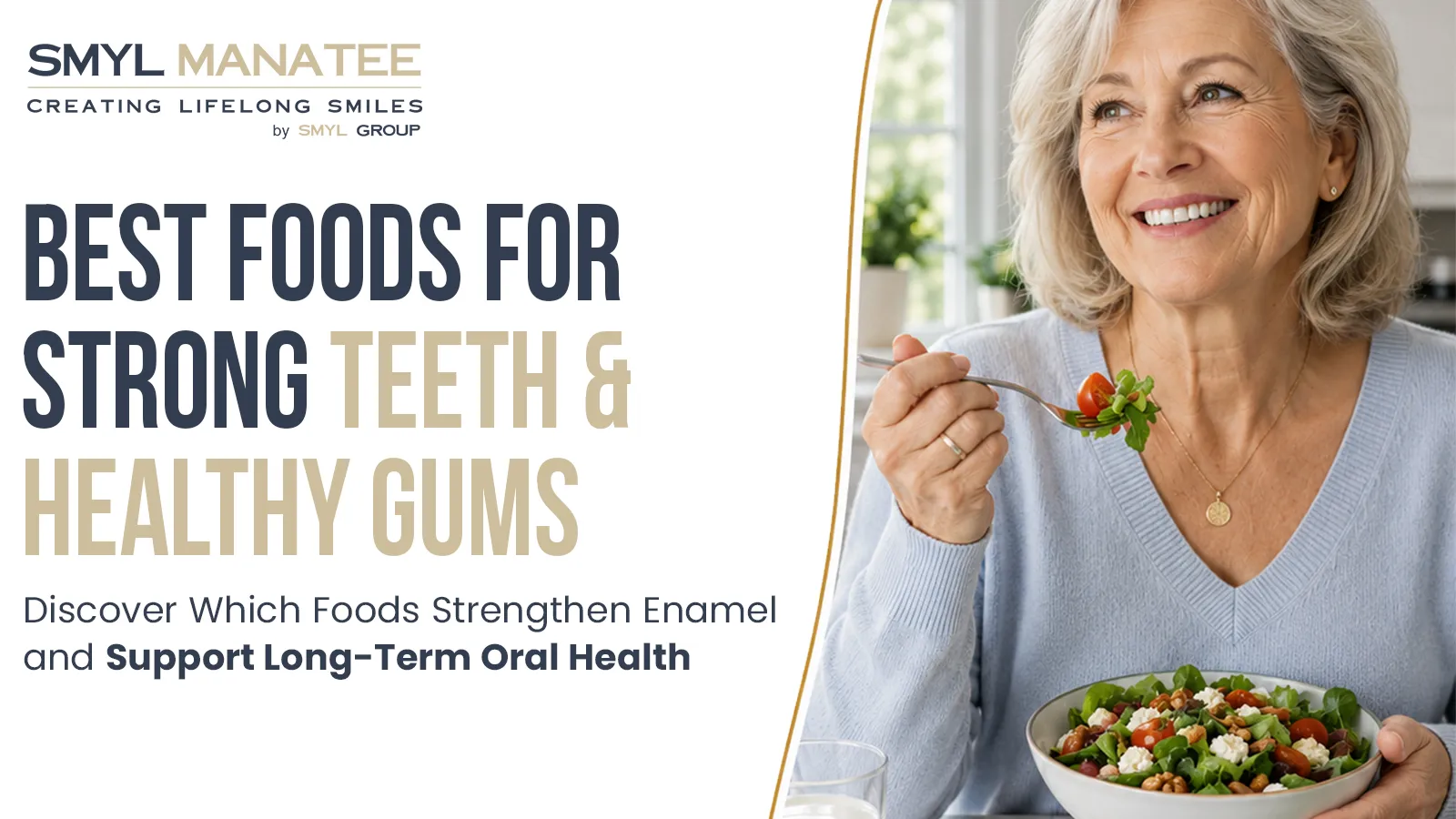
Best Foods for Strong Teeth & Healthy Gums Discover Which Foods Strengthen Enamel and Support Long-Term Oral Health You probably already know that brushing and flossing are important for keeping your smile healthy. But did you know that what you eat can also make a difference to your teeth and gums? Your mouth is the first stop in your digestive system, and the foods you choose can either support your oral health or contribute to problems like cavities, enamel erosion, and gum disease. From crunchy vegetables to calcium-rich dairy products, adding the right foods to your diet can help support strong teeth and healthy gums. At Smyl Manatee, we believe good oral health starts with everyday habits. For patients in Bradenton, FL, Lakewood Ranch, Palmetto, and surrounding Manatee County communities, we’re here to help you build a smile that stays healthy for years to come. How Does Food Affect Your Teeth? Every time you eat, bacteria in your mouth interact with carbohydrates and sugars in food. This process produces acids that can attack your tooth enamel. Frequent exposure to these acids can contribute to tooth decay and enamel erosion. On the other hand, foods rich in nutrients such as calcium, phosphorus, and vitamins can support healthy teeth and gums. Your diet doesn’t replace brushing, flossing, or professional dental care—but it can be an important part of your overall oral health routine. 1. Dairy Products for Stronger Teeth Milk, cheese, and plain yogurt are excellent sources of calcium and phosphorus, two minerals that help support strong teeth. Cheese can also stimulate saliva production, which naturally helps wash away food particles and neutralize acids in your mouth. Good choices include: Cheese Plain yogurt Milk Cottage cheese If you’re looking for a simple snack that supports your smile, a small serving of cheese or unsweetened yogurt can be a great option. 2. Leafy Greens Vegetables such as spinach, kale, and other leafy greens are packed with vitamins and minerals that support overall health—including your oral health. They can provide nutrients such as: Calcium Vitamin C Folate Vitamin K Leafy greens can be an easy addition to salads, smoothies, sandwiches, or meals. 3. Crunchy Vegetables Crunchy vegetables such as carrots, celery, and cucumbers contain plenty of water and require chewing. Chewing can stimulate saliva production, which is one of your mouth’s natural defenses against acids. These vegetables can also make a satisfying alternative to sugary snacks. Try: 🥕 Carrots 🥒 Cucumbers 🥬 Celery 🥦 Broccoli 4. Apples and Other Crunchy Fruits An apple isn’t a substitute for brushing your teeth, but crunchy fruits can be a better snack choice than sticky or highly processed sweets. Apples contain water and require chewing, which can help stimulate saliva. Other fruit choices include: Pears Strawberries Melons Remember that fruit still contains naturally occurring sugars and acids, so moderation and good oral hygiene remain important. 5. Foods Rich in Vitamin D Vitamin D helps your body absorb calcium, making it an important nutrient for maintaining healthy bones and teeth. Foods that provide vitamin D include: Fatty fish Egg yolks Fortified milk Fortified foods A balanced diet that includes adequate vitamin D can complement your overall dental care routine. 6. Nuts and Seeds Many nuts and seeds contain minerals and nutrients that can support your teeth. For example, almonds provide calcium and phosphorus while being relatively low in sugar. Choose unsweetened varieties when possible, and be mindful of very hard foods if you have sensitive or damaged teeth. 7. Water: One of the Best Drinks for Your Smile When it comes to beverages, water is one of the best choices for your teeth. Water helps: Rinse away food particles Keep your mouth hydrated Support saliva production Reduce prolonged exposure to sugary or acidic beverages If your local water supply contains fluoride, drinking tap water can also contribute to your daily fluoride exposure. Foods and Drinks to Limit You don’t have to completely eliminate your favorite foods to maintain a healthy smile. However, it’s smart to limit foods and drinks that are high in sugar or acid. These include: 🍬 Sticky Candy Sticky sweets can remain on your teeth for longer periods, giving bacteria more opportunity to produce acids. 🥤 Sugary Drinks Soda, sweet tea, energy drinks, and other sugary beverages can expose your teeth to sugar and, in some cases, acids. 🍭 Frequent Snacking It’s not just what you eat—it can also be how frequently you eat. Constant snacking gives your teeth less time between acid attacks. 🍋 Highly Acidic Foods and Drinks Citrus fruits, sports drinks, soda, and other acidic foods and beverages can contribute to enamel erosion when consumed frequently. What About Sugar-Free Foods? Sugar-free doesn’t automatically mean tooth-friendly. Some sugar-free products may still be acidic, while others may contain ingredients that can affect your teeth. Look at the overall nutritional content rather than relying only on a “sugar-free” label. Build a Smile-Friendly Plate You don’t need a complicated diet to support your oral health. A simple meal might include: Protein: Grilled chicken, fish, eggs, or beans Vegetables: Broccoli, leafy greens, carrots, or cucumber Healthy fats: Nuts or seeds Dairy: Cheese or plain yogurt Drink: Water Small, consistent choices can add up over time. Food Is Only One Part of a Healthy Smile Even the healthiest diet can’t replace proper dental care. To keep your teeth and gums healthy: Brush twice a day Floss daily Drink plenty of water Limit frequent sugary snacks Schedule regular dental cleanings Visit your dentist for routine exams Professional cleanings and dental exams allow your dental team to identify potential problems before they become more serious. Preventive Dental Care at Smyl Manatee At Smyl Manatee, we’re committed to helping Bradenton-area families maintain healthy smiles through preventive and personalized dental care. Regular dental visits can help detect: Early cavities Gum disease Enamel wear Tooth sensitivity Other oral health concerns For patients without dental insurance, the Smyl Care Plan can make routine dental care more accessible. The plan provides preventive care benefits and