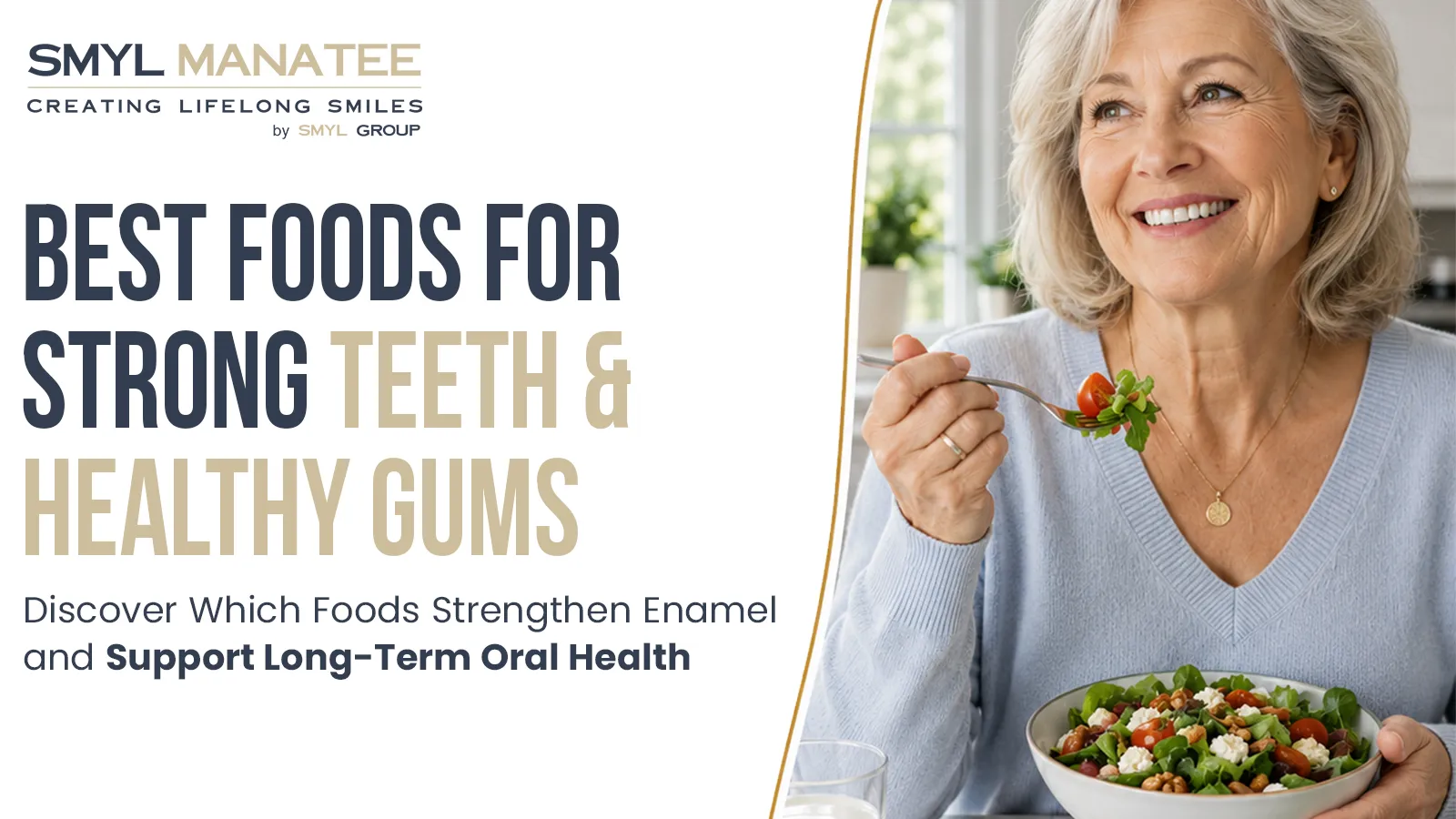
Best Foods for Strong Teeth & Healthy Gums
Best Foods for Strong Teeth & Healthy Gums Discover Which Foods Strengthen Enamel and Support Long-Term Oral Health You probably already know that brushing and flossing are important for keeping your smile healthy. But did you know that what you eat can also make a difference to your teeth and gums? Your mouth is the first stop in your digestive system, and the foods you choose can either support your oral health or contribute to problems like cavities, enamel erosion, and gum disease. From crunchy vegetables to calcium-rich dairy products, adding the right foods to your diet can help support strong teeth and healthy gums. At Smyl Manatee, we believe good oral health starts with everyday habits. For patients in Bradenton, FL, Lakewood Ranch, Palmetto, and surrounding Manatee County communities, we’re here to help you build a smile that stays healthy for years to come. How Does Food Affect Your Teeth? Every time you eat, bacteria in your mouth interact with carbohydrates and sugars in food. This process produces acids that can attack your tooth enamel. Frequent exposure to these acids can contribute to tooth decay and enamel erosion. On the other hand, foods rich in nutrients such as calcium, phosphorus, and vitamins can support healthy teeth and gums. Your diet doesn’t replace brushing, flossing, or professional dental care—but it can be an important part of your overall oral health routine. 1. Dairy Products for Stronger Teeth Milk, cheese, and plain yogurt are excellent sources of calcium and phosphorus, two minerals that help support strong teeth. Cheese can also stimulate saliva production, which naturally helps wash away food particles and neutralize acids in your mouth. Good choices include: Cheese Plain yogurt Milk Cottage cheese If you’re looking for a simple snack that supports your smile, a small serving of cheese or unsweetened yogurt can be a great option. 2. Leafy Greens Vegetables such as spinach, kale, and other leafy greens are packed with vitamins and minerals that support overall health—including your oral health. They can provide nutrients such as: Calcium Vitamin C Folate Vitamin K Leafy greens can be an easy addition to salads, smoothies, sandwiches, or meals. 3. Crunchy Vegetables Crunchy vegetables such as carrots, celery, and cucumbers contain plenty of water and require chewing. Chewing can stimulate saliva production, which is one of your mouth’s natural defenses against acids. These vegetables can also make a satisfying alternative to sugary snacks. Try: 🥕 Carrots 🥒 Cucumbers 🥬 Celery 🥦 Broccoli 4. Apples and Other Crunchy Fruits An apple isn’t a substitute for brushing your teeth, but crunchy fruits can be a better snack choice than sticky or highly processed sweets. Apples contain water and require chewing, which can help stimulate saliva. Other fruit choices include: Pears Strawberries Melons Remember that fruit still contains naturally occurring sugars and acids, so moderation and good oral hygiene remain important. 5. Foods Rich in Vitamin D Vitamin D helps your body absorb calcium, making it an important nutrient for maintaining healthy bones and teeth. Foods that provide vitamin D include: Fatty fish Egg yolks Fortified milk Fortified foods A balanced diet that includes adequate vitamin D can complement your overall dental care routine. 6. Nuts and Seeds Many nuts and seeds contain minerals and nutrients that can support your teeth. For example, almonds provide calcium and phosphorus while being relatively low in sugar. Choose unsweetened varieties when possible, and be mindful of very hard foods if you have sensitive or damaged teeth. 7. Water: One of the Best Drinks for Your Smile When it comes to beverages, water is one of the best choices for your teeth. Water helps: Rinse away food particles Keep your mouth hydrated Support saliva production Reduce prolonged exposure to sugary or acidic beverages If your local water supply contains fluoride, drinking tap water can also contribute to your daily fluoride exposure. Foods and Drinks to Limit You don’t have to completely eliminate your favorite foods to maintain a healthy smile. However, it’s smart to limit foods and drinks that are high in sugar or acid. These include: 🍬 Sticky Candy Sticky sweets can remain on your teeth for longer periods, giving bacteria more opportunity to produce acids. 🥤 Sugary Drinks Soda, sweet tea, energy drinks, and other sugary beverages can expose your teeth to sugar and, in some cases, acids. 🍭 Frequent Snacking It’s not just what you eat—it can also be how frequently you eat. Constant snacking gives your teeth less time between acid attacks. 🍋 Highly Acidic Foods and Drinks Citrus fruits, sports drinks, soda, and other acidic foods and beverages can contribute to enamel erosion when consumed frequently. What About Sugar-Free Foods? Sugar-free doesn’t automatically mean tooth-friendly. Some sugar-free products may still be acidic, while others may contain ingredients that can affect your teeth. Look at the overall nutritional content rather than relying only on a “sugar-free” label. Build a Smile-Friendly Plate You don’t need a complicated diet to support your oral health. A simple meal might include: Protein: Grilled chicken, fish, eggs, or beans Vegetables: Broccoli, leafy greens, carrots, or cucumber Healthy fats: Nuts or seeds Dairy: Cheese or plain yogurt Drink: Water Small, consistent choices can add up over time. Food Is Only One Part of a Healthy Smile Even the healthiest diet can’t replace proper dental care. To keep your teeth and gums healthy: Brush twice a day Floss daily Drink plenty of water Limit frequent sugary snacks Schedule regular dental cleanings Visit your dentist for routine exams Professional cleanings and dental exams allow your dental team to identify potential problems before they become more serious. Preventive Dental Care at Smyl Manatee At Smyl Manatee, we’re committed to helping Bradenton-area families maintain healthy smiles through preventive and personalized dental care. Regular dental visits can help detect: Early cavities Gum disease Enamel wear Tooth sensitivity Other oral health concerns For patients without dental insurance, the Smyl Care Plan can make routine dental care more accessible. The plan provides preventive care benefits and