Smyl Manatee |

Everything You Need to Know About Dental Crowns

Everything You Need to Know About Dental CrownsHow Dental Crowns Restore Damaged Teeth, Protect Your Smile & Bring Back Your Confidence A damaged tooth can affect much more than your smile. A large cavity, cracked tooth, old filling, or weakened tooth can make eating uncomfortable and leave you wondering whether the tooth can still be saved. That’s where a dental crown may help. A dental crown is a custom-made restoration that fits over a damaged or weakened tooth. It can restore the tooth’s shape, strength, appearance, and function while helping protect it from further damage. At Smyl Manatee, we provide restorative dental care for patients in Bradenton, FL, Lakewood Ranch, Palmetto, and surrounding Manatee County communities. If you have a damaged or weakened tooth, our team can evaluate your smile and help determine whether a crown is the right solution. What Is a Dental Crown? A dental crown is a tooth-shaped restoration that covers most or all of the visible portion of a damaged tooth. Think of it as a protective “cap” for your tooth. Once placed, a crown can help: Strengthen a weakened tooth Restore the tooth’s shape Improve chewing function Protect a damaged tooth Improve the appearance of a discolored or misshapen tooth Crowns can be made from several different materials, depending on the location of the tooth and your individual needs. Why Might You Need a Dental Crown? Your dentist may recommend a crown when a tooth has been damaged beyond what a regular filling can reliably repair. Common reasons include: A Large Cavity If decay has removed a significant amount of tooth structure, a filling may not provide enough support. A crown can help restore and protect the remaining tooth. A Cracked or Broken Tooth A cracked tooth can become weaker over time. A crown may help hold the tooth together and protect it from additional damage. A Large or Old Filling Large fillings can sometimes leave the remaining tooth structure vulnerable to fracture. A crown may provide additional protection. After a Root Canal A tooth that has undergone root canal treatment may need additional protection because it has lost some of its natural structure. Cosmetic Concerns In certain cases, crowns can improve the appearance of severely discolored, worn, or misshapen teeth. Signs You May Need a Dental Crown You can’t determine on your own whether a crown is necessary, but certain symptoms may indicate that a tooth needs professional evaluation. You may want to see your dentist if you experience: Pain when chewing A cracked or broken tooth Significant tooth sensitivity A large filling that is failing A severely worn tooth A tooth that has undergone root canal treatment A tooth that has lost significant structure Don’t wait until a damaged tooth becomes an emergency. Early evaluation may provide more treatment options. What Happens During a Dental Crown Procedure? Getting a crown typically involves several steps. 1. Comprehensive Examination Your dentist first examines the tooth and surrounding tissues. Digital X-rays or other imaging may be used when necessary. The goal is to determine whether the tooth can be restored and whether a crown is appropriate. 2. Preparing the Tooth If a crown is recommended, the tooth is carefully prepared so the restoration can fit securely. The amount of preparation depends on the condition and structure of the tooth 3. Taking an Impression or Digital Scan Your dentist creates a precise model of your tooth so the crown can be designed to fit your bite and surrounding teeth. 4. Temporary Protection Depending on the type of crown and treatment process, a temporary restoration may be placed while your permanent crown is being created. 5. Placing the Permanent Crown Once the final crown is ready, your dentist checks its fit, appearance, and bite before securely placing it over the tooth. The goal is a restoration that feels comfortable and functions naturally. What Are Dental Crowns Made From? Dental crowns can be made from several materials. Porcelain or Ceramic These crowns can provide a highly natural appearance and are often used when aesthetics are important. Zirconia Zirconia is a strong ceramic material that may be suitable for both front and back teeth depending on the patient’s needs. Porcelain-Fused-to-Metal These crowns combine a metal structure with a tooth-colored exterior. Metal Metal crowns are extremely durable and may be considered for certain back teeth where strength is a priority. Your dentist will recommend a material based on factors such as: Tooth location Bite forces Cosmetic goals Amount of remaining tooth structure Overall oral health How Long Do Dental Crowns Last? A dental crown can last many years with proper care, but its lifespan varies from person to person. Factors that can affect how long your crown lasts include: Oral hygiene Diet Teeth grinding Bite forces The condition of the underlying tooth Regular dental care Taking care of your crown is very similar to taking care of your natural teeth. How to Care for a Dental Crown A crown doesn’t mean you can stop taking care of the tooth underneath it. To help protect your crown: Brush Twice a Day Use a soft-bristled toothbrush and fluoride toothpaste. Floss Daily Food and bacteria can still accumulate around a crowned tooth. Cleaning around the crown and gumline is important. Don’t Use Your Teeth as Tools Avoid biting hard objects such as pens, ice, or packaging. Protect Against Teeth Grinding If you grind or clench your teeth, ask your dentist whether a custom night guard may be appropriate. Keep Regular Dental Appointments Routine exams and professional cleanings help your dentist monitor both your crown and the surrounding teeth. How Much Does a Dental Crown Cost? The cost of a dental crown can vary depending on several factors, including: Type of crown material Location of the tooth Complexity of the treatment Whether additional treatment is necessary Dental insurance coverag At Smyl Manatee, we’ll discuss your treatment options and costs before moving forward so you understand what to expect. We also offer flexible financing options
Best Foods for Strong Teeth & Healthy Gums

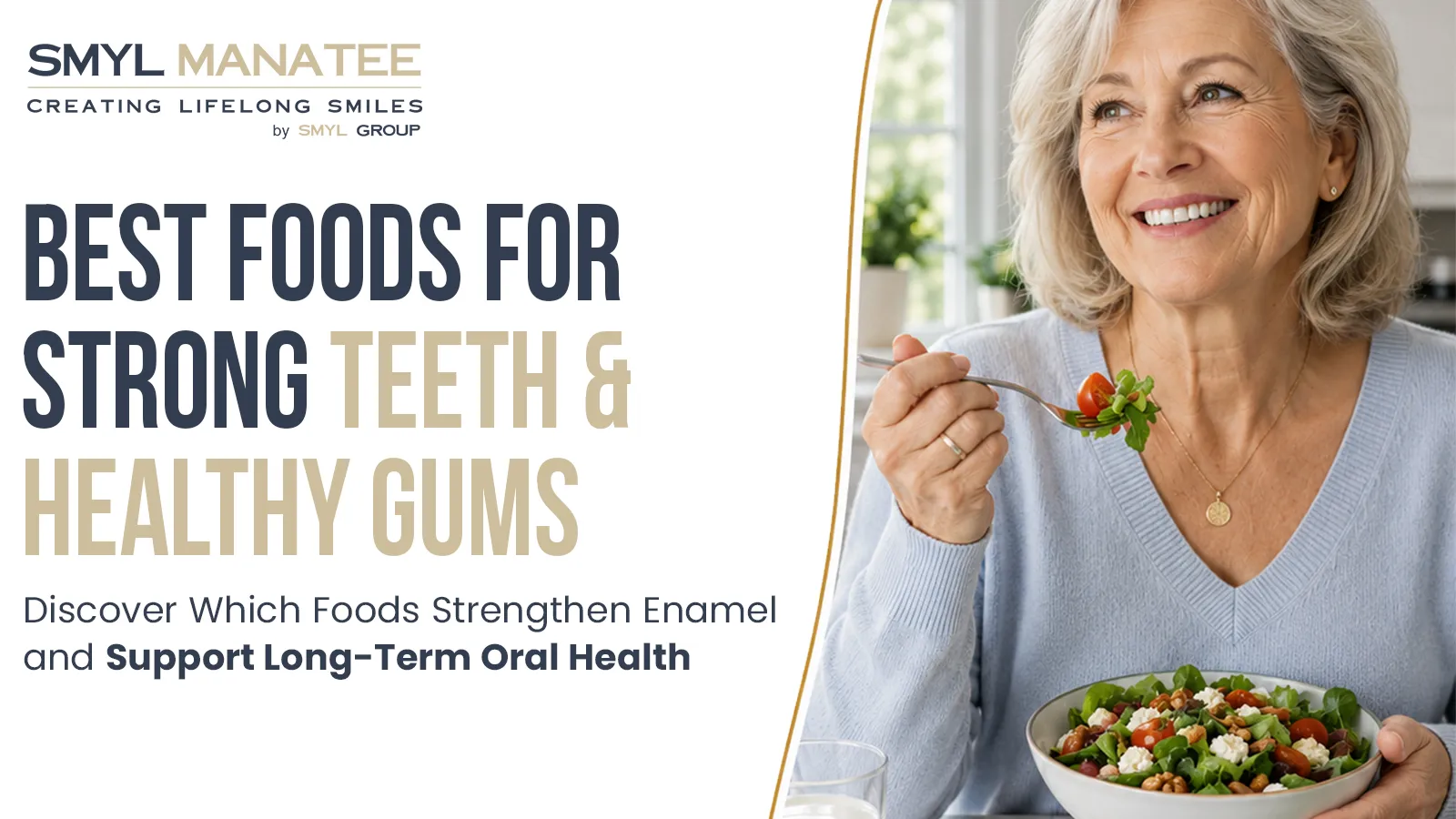
Best Foods for Strong Teeth & Healthy Gums Discover Which Foods Strengthen Enamel and Support Long-Term Oral Health You probably already know that brushing and flossing are important for keeping your smile healthy. But did you know that what you eat can also make a difference to your teeth and gums? Your mouth is the first stop in your digestive system, and the foods you choose can either support your oral health or contribute to problems like cavities, enamel erosion, and gum disease. From crunchy vegetables to calcium-rich dairy products, adding the right foods to your diet can help support strong teeth and healthy gums. At Smyl Manatee, we believe good oral health starts with everyday habits. For patients in Bradenton, FL, Lakewood Ranch, Palmetto, and surrounding Manatee County communities, we’re here to help you build a smile that stays healthy for years to come. How Does Food Affect Your Teeth? Every time you eat, bacteria in your mouth interact with carbohydrates and sugars in food. This process produces acids that can attack your tooth enamel. Frequent exposure to these acids can contribute to tooth decay and enamel erosion. On the other hand, foods rich in nutrients such as calcium, phosphorus, and vitamins can support healthy teeth and gums. Your diet doesn’t replace brushing, flossing, or professional dental care—but it can be an important part of your overall oral health routine. 1. Dairy Products for Stronger Teeth Milk, cheese, and plain yogurt are excellent sources of calcium and phosphorus, two minerals that help support strong teeth. Cheese can also stimulate saliva production, which naturally helps wash away food particles and neutralize acids in your mouth. Good choices include: Cheese Plain yogurt Milk Cottage cheese If you’re looking for a simple snack that supports your smile, a small serving of cheese or unsweetened yogurt can be a great option. 2. Leafy Greens Vegetables such as spinach, kale, and other leafy greens are packed with vitamins and minerals that support overall health—including your oral health. They can provide nutrients such as: Calcium Vitamin C Folate Vitamin K Leafy greens can be an easy addition to salads, smoothies, sandwiches, or meals. 3. Crunchy Vegetables Crunchy vegetables such as carrots, celery, and cucumbers contain plenty of water and require chewing. Chewing can stimulate saliva production, which is one of your mouth’s natural defenses against acids. These vegetables can also make a satisfying alternative to sugary snacks. Try: 🥕 Carrots 🥒 Cucumbers 🥬 Celery 🥦 Broccoli 4. Apples and Other Crunchy Fruits An apple isn’t a substitute for brushing your teeth, but crunchy fruits can be a better snack choice than sticky or highly processed sweets. Apples contain water and require chewing, which can help stimulate saliva. Other fruit choices include: Pears Strawberries Melons Remember that fruit still contains naturally occurring sugars and acids, so moderation and good oral hygiene remain important. 5. Foods Rich in Vitamin D Vitamin D helps your body absorb calcium, making it an important nutrient for maintaining healthy bones and teeth. Foods that provide vitamin D include: Fatty fish Egg yolks Fortified milk Fortified foods A balanced diet that includes adequate vitamin D can complement your overall dental care routine. 6. Nuts and Seeds Many nuts and seeds contain minerals and nutrients that can support your teeth. For example, almonds provide calcium and phosphorus while being relatively low in sugar. Choose unsweetened varieties when possible, and be mindful of very hard foods if you have sensitive or damaged teeth. 7. Water: One of the Best Drinks for Your Smile When it comes to beverages, water is one of the best choices for your teeth. Water helps: Rinse away food particles Keep your mouth hydrated Support saliva production Reduce prolonged exposure to sugary or acidic beverages If your local water supply contains fluoride, drinking tap water can also contribute to your daily fluoride exposure. Foods and Drinks to Limit You don’t have to completely eliminate your favorite foods to maintain a healthy smile. However, it’s smart to limit foods and drinks that are high in sugar or acid. These include: 🍬 Sticky Candy Sticky sweets can remain on your teeth for longer periods, giving bacteria more opportunity to produce acids. 🥤 Sugary Drinks Soda, sweet tea, energy drinks, and other sugary beverages can expose your teeth to sugar and, in some cases, acids. 🍭 Frequent Snacking It’s not just what you eat—it can also be how frequently you eat. Constant snacking gives your teeth less time between acid attacks. 🍋 Highly Acidic Foods and Drinks Citrus fruits, sports drinks, soda, and other acidic foods and beverages can contribute to enamel erosion when consumed frequently. What About Sugar-Free Foods? Sugar-free doesn’t automatically mean tooth-friendly. Some sugar-free products may still be acidic, while others may contain ingredients that can affect your teeth. Look at the overall nutritional content rather than relying only on a “sugar-free” label. Build a Smile-Friendly Plate You don’t need a complicated diet to support your oral health. A simple meal might include: Protein: Grilled chicken, fish, eggs, or beans Vegetables: Broccoli, leafy greens, carrots, or cucumber Healthy fats: Nuts or seeds Dairy: Cheese or plain yogurt Drink: Water Small, consistent choices can add up over time. Food Is Only One Part of a Healthy Smile Even the healthiest diet can’t replace proper dental care. To keep your teeth and gums healthy: Brush twice a day Floss daily Drink plenty of water Limit frequent sugary snacks Schedule regular dental cleanings Visit your dentist for routine exams Professional cleanings and dental exams allow your dental team to identify potential problems before they become more serious. Preventive Dental Care at Smyl Manatee At Smyl Manatee, we’re committed to helping Bradenton-area families maintain healthy smiles through preventive and personalized dental care. Regular dental visits can help detect: Early cavities Gum disease Enamel wear Tooth sensitivity Other oral health concerns For patients without dental insurance, the Smyl Care Plan can make routine dental care more accessible. The plan provides preventive care benefits and

How Dental Anxiety Can Affect Your Oral Health Overcoming Fear for a Healthier Smile

How Dental Anxiety Can Affect Your Oral Health Overcoming Fear for a Healthier Smile For many people, going to the dentist isn’t something they look forward to. In fact, dental anxiety is one of the most common reasons people delay or avoid dental care altogether. Whether it’s fear of pain, a past negative experience, or simply feeling uneasy in the dental chair, avoiding regular visits can have a lasting impact on your oral health. At Smyl Manatee, we understand that dental anxiety is real. That’s why we’re committed to providing compassionate, gentle care in a comfortable environment for patients throughout Bradenton, Lakewood Ranch, Palmetto, and the surrounding communities. If fear has been keeping you from visiting the dentist, here’s what you should know—and how taking the first step can protect both your smile and your overall health. 😟 What Is Dental Anxiety? Dental anxiety is the feeling of nervousness, fear, or stress before or during a dental appointment. It affects people of all ages and can range from mild uneasiness to severe fear that causes someone to avoid dental care for years. Common reasons people experience dental anxiety include: A previous painful dental experience Fear of needles or dental instruments Concern about discomfort during treatment Feeling embarrassed about the condition of their teeth Worry about losing control during a procedure Fear of receiving bad news about their oral health No matter the reason, it’s important to remember that you’re not alone—and a caring dental team will never judge you. How Avoiding the Dentist Can Affect Your Oral Health Skipping routine dental visits may seem like it reduces stress in the short term, but it often allows small dental problems to become much larger ones. Cavities Can Get Worse A small cavity may not cause pain at first. Without treatment, decay can spread deeper into the tooth, eventually requiring a crown, root canal, or even an extraction. Gum Disease Can Progress Silently Gum disease often begins with mild symptoms like bleeding gums or bad breath. Left untreated, it can damage the bone that supports your teeth and increase the risk of tooth loss. Minor Problems Can Become Dental Emergencies A loose filling, cracked tooth, or untreated cavity can suddenly turn into severe pain or infection, often requiring urgent dental care. Regular checkups help catch these issues before they become emergencies. Delaying Care Can Increase Treatment Costs Preventive care is almost always less expensive than treating advanced dental problems. Routine cleanings and exams can help you avoid more complex procedures later. Your Confidence Can Be Affected Many people who avoid the dentist become self-conscious about their smiles over time. Dental issues such as stained, chipped, or missing teeth can affect confidence in both personal and professional settings. How Smyl Manatee Helps Patients Feel Comfortable At Smyl Manatee, we know that every patient has a different story. Our goal is to make every visit as comfortable and stress-free as possible. When you visit our office, you can expect: ✔ A warm, friendly team that listens to your concerns ✔ Gentle, patient-focused care ✔ Clear explanations before any treatment begins ✔ Personalized treatment plans based on your needs ✔ A judgment-free environment where your comfort comes first We take the time to answer your questions and help you feel informed every step of the way. Tips for Managing Dental Anxiety If you’re nervous about visiting the dentist, these simple strategies may help: Talk to Your Dental Team Let us know you’re feeling anxious. We can adjust your visit, explain each step, and work at a pace that feels comfortable for you. Bring Music or a Podcast Listening to your favorite playlist or podcast during treatment can help you relax and stay distracted. We also have those to help our patient. Schedule Morning Appointments Many patients feel less anxious when they schedule appointments early in the day instead of worrying about them for hours. Practice Deep Breathing Simple breathing exercises before and during your appointment can help reduce tension and promote relaxation. Don’t Wait Until You’re in Pain Many people only visit the dentist when something hurts. Unfortunately, this often means treatment is more involved than it would have been if the problem had been caught early. Routine preventive visits are typically quicker, simpler, and more comfortable. Prevention Makes Every Visit Easier The more regularly you visit the dentist, the less likely you are to need extensive treatment. Routine preventive care includes: Professional dental cleanings Comprehensive exams Digital X-rays when needed Early detection of cavities and gum disease Personalized oral health recommendations For patients without dental insurance, the Smyl Care Plan makes it easier to stay on schedule with affordable preventive care. Members receive: Regular exams and professional cleanings Necessary X-rays Discounts on many dental treatments No deductibles, annual maximums, or waiting periods 👉 Learn more about the Smyl Care Plan: https://smylmanatee.com/smile-care-plan/ Take the First Step Toward a Healthier Smile Dental anxiety doesn’t have to keep you from getting the care you deserve. Whether it’s been six months or several years since your last appointment, our compassionate team is here to help you feel comfortable, informed, and confident. At Smyl Manatee, we’re proud to help patients across Bradenton, Lakewood Ranch, Palmetto, and nearby communities overcome dental anxiety with gentle, personalized care. Call (941) 792-7777 to schedule your appointment today and experience dentistry designed with your comfort in mind. CALL NOW

How Dental Anxiety Affects Oral Health

How Dental Anxiety Can Affect Your Oral Health (And Ways to Manage It)Overcoming Fear for a Healthier Smile If the thought of visiting the dentist makes you nervous, you’re not alone. Millions of people experience some level of dental anxiety, ranging from mild uneasiness to severe fear that causes them to avoid dental appointments altogether. While dental anxiety is common, postponing dental care can have serious consequences for your oral health. The longer small dental problems go untreated, the more likely they are to become painful, complex, and expensive to fix. At Smyl Manatee, we understand that dental visits can feel overwhelming for some patients. That’s why we focus on creating a comfortable, welcoming experience for individuals and families throughout Bradenton. What Is Dental Anxiety? Dental anxiety refers to feelings of stress, worry, nervousness, or fear associated with dental visits. Common causes include: Previous negative dental experiences Fear of pain or discomfort Embarrassment about oral health conditions Fear of needles or dental instruments Feeling a lack of control during treatment For some patients, these concerns can become so strong that they avoid routine dental care entirely. How Dental Anxiety Can Affect Your Oral Health Avoiding the dentist may provide temporary relief from anxiety, but it often leads to larger dental problems over time. Increased Risk of Cavities Skipping regular exams and cleanings allows plaque and tartar to build up, increasing the risk of tooth decay. Higher Chance of Gum Disease Without professional cleanings, gum inflammation can progress into periodontal disease, which may eventually lead to tooth loss. More Dental Emergencies Small issues like minor cavities or cracked fillings can become painful infections or emergencies when left untreated. More Complex and Costly Treatment Preventive care is often simple and affordable. Delayed treatment may require crowns, root canals, extractions, or tooth replacement procedures. Lower Self-Confidence Dental problems can affect the appearance of your smile, leading some people to hide their teeth or avoid social situations. Ways to Manage Dental Anxiety The good news is that dental anxiety can be managed, and today’s dental care is more comfortable than ever. 1. Share Your Concerns One of the most important steps is simply letting your dental team know you’re nervous. A caring dental office can adjust treatment and communication to help you feel more comfortable. 2. Schedule Early Appointments Many anxious patients find it easier to visit earlier in the day before stress has time to build. 3. Bring Headphones or Music Listening to music or a podcast can help distract your mind and make appointments feel shorter. 4. Practice Relaxation Techniques Deep breathing and mindfulness exercises can help reduce tension before and during your appointment. 5. Start with a Simple Visit If it’s been years since you’ve seen a dentist, start with a consultation or routine exam. Taking the first step often feels easier than expected. How Smyl Manatee Helps Nervous Patients Feel Comfortable At Smyl Manatee, we believe every patient deserves compassionate, judgment-free care. Our team focuses on: ✔ Gentle treatment techniques ✔ Clear communication and transparency ✔ Personalized care plans ✔ A welcoming, supportive environment ✔ Taking time to answer questions and concerns Our goal is to help patients feel confident and comfortable at every visit. Prevent Problems Before They Become Stressful One of the best ways to reduce dental anxiety is to stay ahead of dental problems through preventive care. The Smyl Care Plan makes routine care more affordable for patients without insurance. Benefits include: Regular exams and cleanings X-rays Discounts on treatments No waiting periods or insurance hassles 👉 Learn more: https://smylmanatee.com/smile-care-plan/ A Healthy Smile Starts with Taking the First Step Dental anxiety is real, but it doesn’t have to stand between you and a healthy smile. With a caring dental team and a focus on prevention, you can protect your oral health while feeling more comfortable about dental care. If you’ve been putting off a visit because of fear or anxiety, you’re not alone—and we’re here to help. CALL NOW

How Often Should You Visit the Dentist

How Often Should You Really Visit the Dentist?The Truth About Dental Checkups and Why They Matter You’ve probably heard the recommendation: visit the dentist every six months. But is that timeline right for everyone? The answer is: it depends. While twice-yearly visits work well for many people, your ideal dental schedule can vary based on your oral health, lifestyle, and risk factors. At Smyl Manatee, we help patients throughout Bradenton create personalized preventive care plans that keep their smiles healthy year-round. Why Routine Dental Visits Matter Regular dental visits do more than clean your teeth. They help identify problems before they become painful or expensive. Routine appointments can help detect: Cavities in early stages Gum disease Worn fillings or crowns Teeth grinding damage Oral cancer warning signs Hidden problems below the gumline Many dental issues begin quietly — often without symptoms. Why Every Six Months Became the Standard For most patients, visiting every six months helps: ✔ Remove plaque and tartar buildup ✔ Catch issues early ✔ Maintain healthier gums ✔ Reduce the risk of major dental treatment later Professional cleanings remove hardened buildup that brushing and flossing at home simply can’t reach. Some People May Need More Frequent Visits Certain patients benefit from appointments every 3–4 months, especially if they have: Gum disease or a history of periodontal treatment Frequent cavities Diabetes Tobacco use Dry mouth Dental implants or extensive restorative work Higher risk of oral health complications More frequent visits help keep small concerns from becoming larger problems. What Happens If You Wait Too Long? Skipping routine visits can allow issues to progress unnoticed. Delaying care may increase the risk of: Tooth decay Gum disease Tooth loss Dental infections More expensive treatment later Preventive care is often simpler and more affordable than corrective treatment. Signs You May Need to Schedule Sooner Don’t wait for your next six-month appointment if you notice: Tooth pain or sensitivity Bleeding gums Persistent bad breath Loose teeth Jaw discomfort Broken fillings or crowns Changes in your mouth deserve attention. Make Preventive Care Affordable with the Smyl Care Plan For patients without insurance, staying on schedule can sometimes feel difficult. That’s why Smyl Manatee offers the Smyl Care Plan. Benefits include: Routine cleanings Discounts on treatments No waiting periods or insurance hassles It’s a simple, affordable way for families in Bradenton to prioritize oral health. 👉 Learn more: https://smylmanatee.com/smile-care-plan/ Your Smile Deserves Consistent Care There’s no one-size-fits-all answer for dental visits. The right schedule depends on your unique needs but staying proactive is always better than waiting for a problem. If it’s been a while since your last visit, now is a great time to get back on track. CALL NOW

Top 7 Daily Habits for Healthy Teeth & Gums

Top 7 Daily Habits for Healthy Teeth & GumsSimple Everyday Tips for a Stronger, Healthier Smile Healthy teeth and gums don’t happen by accident — they’re built through small daily habits that protect your smile over time. The good news? You don’t need complicated routines to maintain excellent oral health. Consistency is what matters most. At Smyl Manatee, we help patients throughout Bradenton create healthy habits that prevent cavities, gum disease, and costly dental problems before they start. Here are seven simple habits that can make a big difference for your smile. 1. Brush Twice a Day Properly Brushing removes plaque and bacteria that can cause cavities and gum disease. For the best results: Brush for at least two minutes Use fluoride toothpaste Choose a soft-bristled toothbrush Don’t brush too aggressively Brushing morning and night is one of the easiest ways to protect your oral health. 2. Floss Every Day Flossing cleans areas your toothbrush can’t reach — especially between teeth and along the gumline. Skipping flossing allows plaque to build up, increasing the risk of: Cavities between teeth Bad breath Gum inflammation Daily flossing is essential for healthy gums. 3. Drink More Water Water helps rinse away food particles and bacteria while supporting saliva production, which naturally protects your teeth. Drinking water throughout the day can also help reduce: Dry mouth Acid buildup Tooth staining In warm Florida weather, staying hydrated benefits both your oral health and overall wellness. 4. Eat Tooth-Friendly Foods Your diet directly affects your teeth and gums. Foods that support oral health include: Crunchy fruits and vegetables Dairy products rich in calcium Leafy greens Lean proteins Try to limit sugary snacks and acidic beverages that can weaken enamel. 5. Avoid Tobacco Products Smoking and tobacco use increase the risk of: Gum disease Tooth loss Bad breath Oral cancer Tooth discoloration Quitting tobacco is one of the best things you can do for your oral and overall health. 6. Protect Your Teeth from Grinding Many people grind or clench their teeth without realizing it, especially during sleep. Teeth grinding can cause: Worn enamel Cracked teeth Jaw pain Headaches If you notice symptoms, your dentist may recommend a custom night guard. 7. Don’t Skip Regular Dental Checkups Even with excellent home care, professional cleanings and exams are still necessary. Routine visits help: Remove hardened tartar Detect cavities early Prevent gum disease Catch dental issues before they worsen Preventive care saves time, discomfort, and money in the long run. Make Preventive Care Easier with the Smyl Care Plan For patients without dental insurance, the Smyl Care Plan offers an affordable way to stay consistent with routine care. Benefits include: Regular exams and cleanings X-rays Discounts on treatments No waiting periods or insurance hassles It’s a simple way for families in Bradenton to protect their smiles year-round. 👉 Learn more: https://smylmanatee.com/smile-care-plan/ Healthy Habits Lead to Healthy Smiles Small daily habits can have a huge impact on your oral health over time. By staying consistent and prioritizing preventive care, you can keep your teeth and gums healthy for years to come. If it’s been a while since your last dental visit, now is a great time to schedule a checkup. CALL NOW

Tooth Pain: Causes, Treatments & When to See a Dentist

Tooth Pain: Causes, Treatments & When to See a DentistWhat Your Toothache Is Trying to Tell You Tooth pain can range from a mild ache to sharp, severe discomfort — and it’s your body’s way of telling you something isn’t right. While it may be tempting to ignore it, tooth pain often signals an underlying issue that needs professional care. At Smyl Manatee, we help patients quickly identify the cause of tooth pain and provide effective treatment to restore comfort and protect their smiles. Common Causes of Tooth Pain Toothaches don’t happen without a reason. Here are some of the most common causes: Tooth Decay (Cavities) Bacteria break down enamel, creating holes in the tooth that can cause sensitivity and pain. Gum Disease Inflamed or infected gums can cause tenderness, swelling, and discomfort around the teeth. Tooth Sensitivity Worn enamel or exposed roots can make teeth sensitive to hot, cold, or sweet foods. Cracked or Damaged Tooth A fracture may not always be visible but can cause sharp pain when biting or chewing. Dental Infection or Abscess A serious condition where infection reaches the tooth’s root, often causing severe pain, swelling, and sometimes fever. Grinding or Clenching (Bruxism) Constant pressure can wear down teeth and lead to soreness or jaw discomfort. Treatment Options for Tooth Pain The right treatment depends on the cause. At Smyl Manatee, we create personalized plans to relieve pain and fix the underlying problem. ✔️ Dental Fillings Used to treat cavities and restore damaged tooth structure. ✔️ Dental Crowns Protect and strengthen cracked or weakened teeth. ✔️ Root Canal Therapy Removes infection from inside the tooth and saves it from extraction. ✔️ Gum Disease Treatment Deep cleaning and periodontal care to restore gum health. ✔️ Night Guards Protect teeth from grinding and reduce pressure on the jaw. When Should You See a Dentist? Some tooth pain can wait a day or two — but certain symptoms require immediate attention. Call a dentist right away if you have: Severe or persistent pain Swelling in the face or gums Fever or signs of infection Pain when biting A cracked or knocked-out tooth Bleeding that doesn’t stop Delaying care can lead to more serious complications and higher treatment costs. Prevent Tooth Pain Before It Starts The best way to avoid toothaches is through consistent preventive care. Brush twice daily Floss every day Limit sugary and acidic foods Visit your dentist regularly For patients without insurance, the Smyl Care Plan makes preventive care affordable and easy. Plan benefits include: Routine exams and cleanings X-rays Discounts on treatments No waiting periods or insurance hassles 👉 Learn more: https://smylmanatee.com/smile-care-plan/ Don’t Ignore Tooth Pain Tooth pain is your body’s warning sign — and early treatment can make all the difference. Whether it’s a minor issue or something more serious, getting it checked promptly can save your tooth and relieve discomfort quickly. CALL NOW

Why Saving Your Natural Teeth Matters More Than You Think

Why Saving Your Natural Teeth Matters More Than You ThinkPreventive Care Tips from Smyl Manatee | Bradenton Dentist Every year, Save Your Tooth Month and National Dental Care Month remind us of something important: nothing truly replaces your natural teeth. Modern dentistry offers incredible solutions like implants and crowns — but preserving your original teeth is always the best option whenever possible At Smyl Manatee, our goal is simple: help you keep your natural smile healthy for life. Why Natural Teeth Are Worth Saving Your natural teeth are uniquely designed for your mouth. They offer advantages that even the best restorations can’t fully replicate: Strong, natural biting and chewing ability Better alignment with surrounding teeth Preservation of jawbone health Natural appearance and feel Lower long-term maintenance Once a tooth is lost, replacing it often requires more complex and costly treatment. Common Reasons Teeth Are Lost Tooth loss doesn’t usually happen overnight. It often starts with small, preventable issues: Untreated cavities Gum disease (periodontitis) Cracked or damaged teeth Teeth grinding (bruxism) Skipping regular dental visits The key is catching these problems early — before they become serious. How Preventive Care Saves Your Teeth Preventive dentistry is your best defense against tooth loss. Simple, consistent care can protect your smile for years. 🪥 1. Routine Dental Cleanings & Exams Professional cleanings remove plaque and tartar that brushing alone can’t. Exams help detect early signs of decay or gum disease. 🦷 2. Early Treatment = Better Outcomes Small cavities can be treated quickly and easily. Left untreated, they may lead to root canals or extractions. 😬 3. Protect Against Grinding Night guards can prevent damage caused by clenching or grinding — a common cause of cracked teeth. 🍎 4. Healthy Diet Choices Limiting sugar and acidic foods helps protect enamel and reduce the risk of decay. 🪥 5. Consistent At-Home Care Brushing twice daily and flossing once a day remain the foundation of long-term oral health. When Saving a Tooth Requires Treatment Sometimes, advanced care is needed to preserve a tooth. At Smyl Manatee, we offer treatments designed to save your natural teeth whenever possible: Tooth-colored fillings Dental crowns Root canal therapy Periodontal (gum) treatment Our approach is always conservative — we focus on saving your tooth before considering replacement options. We Make Preventive Care Affordable with the Smyl Care Plan Cost shouldn’t be a barrier to protecting your smile. The Smyl Care Plan makes preventive care simple and accessible. Plan benefits include: Routine exams and cleanings X-rays Discounts on restorative treatments No insurance hassles or waiting periods It’s a smart way for Bradenton families to stay ahead of dental problems. 👉 Learn more: https://smylmanatee.com/smile-care-plan/ A Healthy Smile Starts with Prevention Saving your natural teeth isn’t just about avoiding procedures — it’s about maintaining your health, confidence, and quality of life. This Save Your Tooth Month, take a step toward protecting your smile. 📍 Smyl Manatee | Bradenton, FL 📞 Call (941) 792-7777 to schedule your visit CALL NOW

The Link Between Oral Health & Overall Wellness

The Link Between Oral Health & Overall Wellness Why Taking Care of Your Smile Protects Your Whole Body 😁 Many people think oral health only affects their teeth and gums. In reality, your mouth is closely connected to your overall health. Research shows that poor oral hygiene can contribute to several serious health conditions, while good dental care can help protect your entire body. At Smyl Manatee, we emphasize preventive dental care because a healthy smile plays a key role in maintaining total wellness. Your Mouth Is the Gateway to Your Body Your mouth contains hundreds of types of bacteria. While many of these bacteria are harmless, poor oral hygiene allows harmful bacteria to multiply. When bacteria build up in the mouth, they can lead to problems such as: Cavities Gum disease Oral infections These bacteria can also enter the bloodstream through inflamed gums, potentially affecting other parts of the body. Oral Health and Heart Disease Studies have shown a connection between gum disease and heart disease. Inflammation caused by periodontal disease may contribute to the narrowing of arteries, increasing the risk of cardiovascular problems. Maintaining healthy gums can help reduce inflammation throughout the body and support heart health. Diabetes and Gum Disease The relationship between diabetes and oral health works both ways. People with diabetes are more prone to infections, including gum disease. Gum disease can make it harder to control blood sugar levels. Regular dental visits and good oral hygiene can help people with diabetes manage their overall health more effectively. Oral Health During Pregnancy Hormonal changes during pregnancy can increase the risk of pregnancy gingivitis, which causes swollen and bleeding gums. Good oral hygiene and routine dental visits during pregnancy can help prevent complications and maintain a healthy smile. Respiratory Health Connections Bacteria from the mouth can sometimes be inhaled into the lungs, potentially increasing the risk of respiratory infections such as pneumonia — especially in older adults. Maintaining clean teeth and gums helps reduce harmful bacteria that could impact respiratory health. Healthy Habits That Protect Your Whole Body Simple daily habits can make a big difference for both oral and overall health: Brush twice a day with fluoride toothpaste Floss daily Drink plenty of water Eat a balanced diet Avoid tobacco products Schedule regular dental checkups Consistency is the key to preventing many oral health issues before they start. Preventive Care Made Easy with the Smyl Care Plan Preventive dental visits are one of the best ways to protect your overall health. For patients without insurance, the Smyl Care Plan offers an affordable way to stay on track with routine care. Benefits include: Regular dental exams and cleanings X-rays Discounts on treatments No waiting periods or insurance paperwork This membership plan helps families in Bradenton maintain healthy smiles year-round. 👉 Learn more: https://smylmanatee.com/smile-care-plan/ A Healthy Smile Supports a Healthy Life Taking care of your teeth and gums is about more than appearances. It’s an important step toward protecting your overall health and well-being. If it’s been a while since your last dental checkup, now is a great time to schedule a visit. 📍 Smyl Manatee | Bradenton, FL 📞 Call (941) 792-7777 to schedule your consultation BOOK ONLINE CALL NOW

You Don’t Feel Anything, That’s Exactly Why You Need a Cleaning

You Don’t Feel Anything, That’s Exactly Why You Need a Cleaning Why Regular Hygiene Visits Matter More Than You Think Most serious dental problems start silently without pain, swelling, or obvious symptoms. That’s the tricky part: you often don’t notice a problem until it’s progressed. Routine dental cleanings and exams catch issues early, before they become bigger, more complex concerns. At Smyl Manatee in Bradenton, preventive care is one of the most powerful ways to protect your smile and keep your oral health on track. Let’s take a closer look at why regular hygiene visits matter. What Happens During a Professional Dental Cleaning? Even if you brush and floss every day, plaque and tartar can build up in places your toothbrush can’t reach. During a professional cleaning, your dental hygienist will: Remove plaque and hardened tartar buildup Clean along and below the gumline Polish teeth to remove surface stains Check for early signs of cavities or decay Evaluate your overall oral health Take X-rays if needed These visits are about more than a fresh feeling; they’re a proactive step to keep your mouth strong, healthy, and problem-free. Dental Problems That Cleanings Help Prevent – Cavities Plaque contains bacteria that produce acids, slowly breaking down enamel and leading to decay. Regular cleanings eliminate this buildup before damage occurs. – Early Gum Inflammation Gum issues often begin without pain. A hygiene visit helps keep gums healthy and prevents minor concerns from becoming more serious. – Persistent Bad Breath Bacteria buildup under the gumline and between teeth can cause bad breath that brushing alone won’t fix. Professional cleaning removes these bacteria and helps you feel confident. – Tooth Stability Healthy gums and bone support every tooth. Preventive care helps protect this foundation so your smile stays strong for years. – Early Detection of Bigger Issues During your hygiene visit, your dental team may identify: Cracked or weakened teeth Failing fillings or crowns Signs of oral cancer Bite or wear concerns Finding these concerns early often means simpler care and better outcomes. How Often Should You Get a Dental Cleaning? Most patients benefit from dental cleanings every six months. Some individuals with higher needs may require more frequent visits; your dentist will recommend the ideal schedule based on your oral health. Smyl Care Plan — Preventive Care Made Simple We understand that maintaining regular dental care should be straightforward and stress-free. That’s why Smyl Manatee offers the Smyl Care Plan, a preventive-focused membership designed for patients without dental insurance. With the Smyl Care Plan, you receive: Routine exams and professional cleanings Required X-rays Guided preventive care to keep your health on track Discounts on additional treatments No insurance claims or complicated paperwork It’s ideal for families in Bradenton who want consistent preventive care and peace of mind. 👉 Learn more here: https://smylmanatee.com/smile-care-plan/ Protect Your Smile Before Problems Start Dental cleanings do more than make your teeth look polished. They help prevent serious oral health concerns and protect your long-term wellness. If it’s been a while since your last cleaning, now is the perfect time to schedule your hygiene visit. 📍 Smyl Manatee | Bradenton, FL 📞 Call (941) 792-7777 to schedule your consultation Your healthiest smile starts with prevention — before symptoms ever begin. BOOK ONLINE CALL NOW